
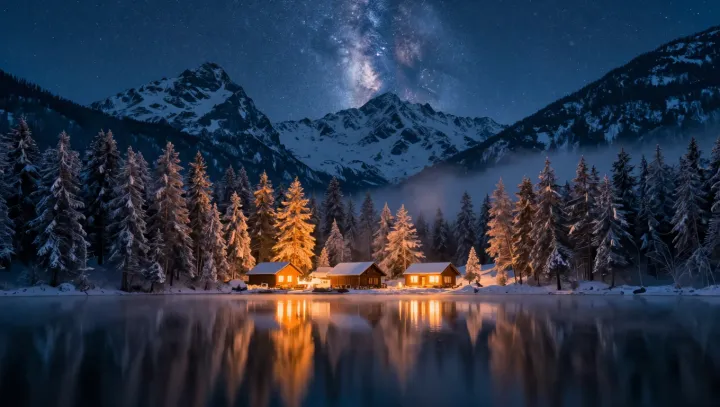
Starlight is the better liar here. Above the lake, each steady point looks current, almost local, yet photon by photon it carries departures that predate human eyes. What reaches the water is radiation locked on course for vast intervals, its path so clean that classical mechanics and vacuum conditions keep its message almost unchanged, so the brain reads it as now.
By contrast, the mountains and snowfields feel permanent only because vision is lazy. Rock faces are under constant mechanical weathering and chemical erosion; snowpacks and ice sheets respond sharply to shifts in air temperature and humidity. Albedo, heat capacity and turbulent fluxes make the lower atmosphere a restless interface, so ridgelines retreat, snow seasons shrink, and glaciers thin in increments too small for a casual visit.
The odd result is this. What is most distant in space can feel nearest in time, while what stands right beside the observer is undergoing rapid mass balance changes and hydrological re wiring. The lake mirrors a sky that barely updates, framed by slopes already drafting their next outline.