
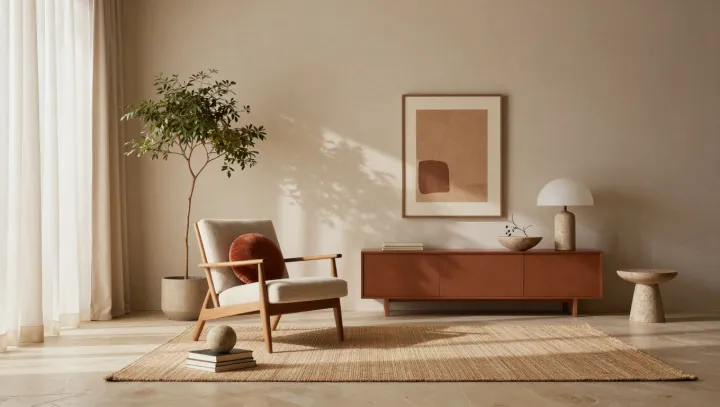
Visual clutter is not a personality quirk; it is a cognitive tax. A corner packed with colors and objects drives up what psychologists call perceptual load, forcing the visual cortex and prefrontal cortex to filter noise before you can even register comfort. Remove nine out of ten objects and the field simplifies, which means the brain runs fewer comparisons and discards fewer signals every second.
Color repetition is the second, underrated lever. When a reading corner uses just three or four earthy hues, it lowers chromatic complexity and stabilizes heart rate variability, according to environmental psychology research on attention restoration. Fewer competing wavelengths mean your eyes track less, saccades shorten, and the autonomic nervous system has less arousal to manage, so the space feels calmer long before you reach for a book.
The spending effect is blunt. Under high visual load, the brain leans on heuristics and impulse, which is why the wrong sofa or yet another side table keeps showing up in your cart. A stripped palette and sparse decor create a clear reference frame; you see at a glance whether a new chair fits the existing color spectrum and volume. That clarity cuts decision fatigue, slows the buy button, and gradually replaces trial and error with a quiet, measurable fit.