
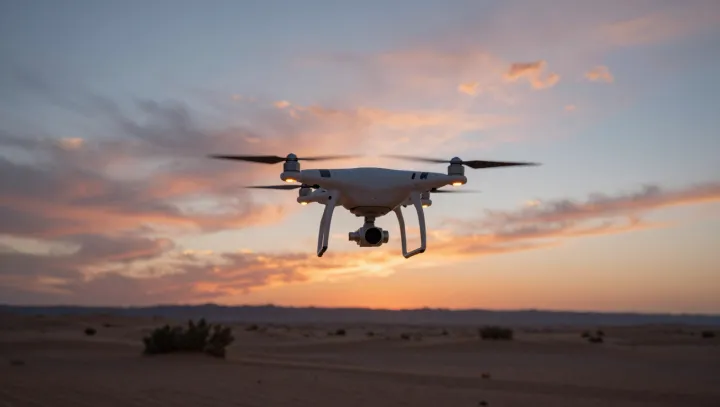
That silky drone shot is a lie. Under the smooth arc and steady horizon sits a nervous stream of joystick twitches, sampled, filtered, and rewritten by silicon before a single motor reacts.
What looks like elegance is error correction. Gyroscopes and accelerometers feed an inertial measurement unit, while GPS and barometric sensors add coarse position and altitude. A flight controller runs tight feedback control loops, often using PID control, that compare intended attitude with actual motion dozens or even hundreds of times each second, trimming out micro-jerks long before they become visible wobble.
The camera’s apparent grace is even more synthetic. A three‑axis gimbal, driven by brushless motors and its own IMU, isolates the lens from airframe shake, counter‑rotating against every twitch the pilot introduces. Digital image stabilization then warps individual frames, using motion vectors and rolling‑shutter compensation, to iron out the last remaining tremor your thumbs injected.
The uncomfortable truth is that consumer drones treat human input as noisy intent, not precise command. Pilots sketch a rough vector with their sticks; the stack of filters, control theory, and gimbal physics interpolates a path no unaided hand could ever trace, and the footage quietly credits you for the work.