
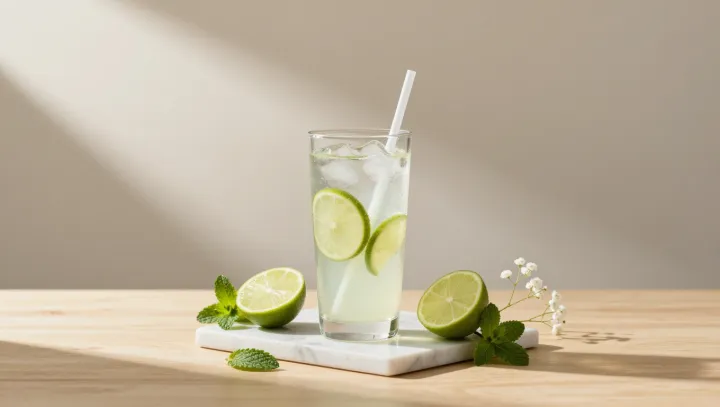
An iced citrus straw habit does not just chill enamel; it rewrites a tiny map of your mouth. Each sip forces a repeat choreography of orbicularis oris, tongue, and temporomandibular joint, so the liquid’s fiercest acid bursts stop landing where they used to and start carving new targets instead.
That shift is not magic, it is motor learning. With every directed sip, lips seal in a slightly fixed configuration, the mandible tracks along the same path, and the tongue shapes a narrow channel that behaves like a guided flume, a pattern neurologists file under procedural memory. Hydrochloric acid in gastric reflux may be stronger, but repeated citric acid exposure at one entry angle can still erode enamel prisms, and the body quietly optimizes the route of least resistance. Over hundreds of cycles, muscles shorten or strengthen along preferred vectors, subtly adjusting occlusion and the contact points where liquid first slams into incisors or premolars.
The unsettling part is this: the habit can build a private orthodontic system, minus the orthodontist. As the straw anchors between the same teeth, bite force redistributes, proprioception recalibrates, and the jaw begins to close in anticipation of that familiar tube, a closed-loop feedback between behavior and anatomy. What started as a harmless ritual for flavor and convenience can rotate the acid splash zone from front teeth to new surfaces, relocating risk rather than removing it.