
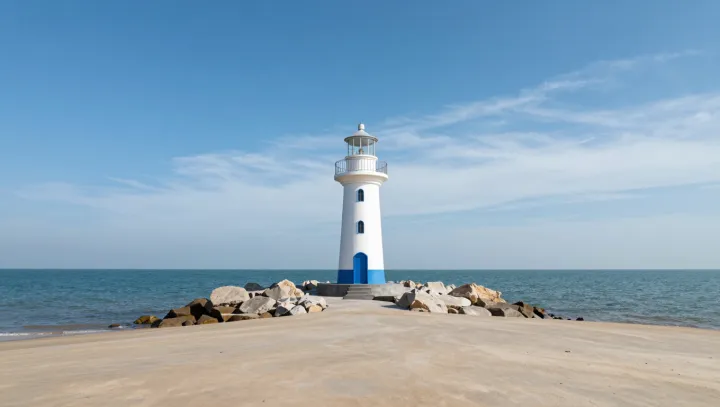
A lighthouse does not just shine; it speaks in code. Each station turns a modest lamp into a distinct optical signature that mariners treat as an ID card on the horizon.
At the heart is a Fresnel lens, a stack of concentric prisms that bends and concentrates light with brutal efficiency, so a small source becomes a tight beam that wastes little energy sideways or upward. Height then finishes the job. Because of Earth’s curvature and simple line-of-sight geometry, placing that lens high on a tower extends the geographic range, allowing the light to clear waves and reach ships tens of kilometers offshore.
The real identity, though, comes from time, not brightness. Each lighthouse uses a defined flash characteristic: precise intervals of light and darkness, such as a single short flash followed by a long eclipse. Mechanical clockwork once rotated the lens; electric stepper drives often do it now. Either way, the rotation rate and shuttering convert continuous emission into a repeating temporal pattern. Mariners match that pattern against nautical charts and Light Lists, treating it much like a radio callsign, but encoded in optics and clockwork rather than voice and alphabet.