
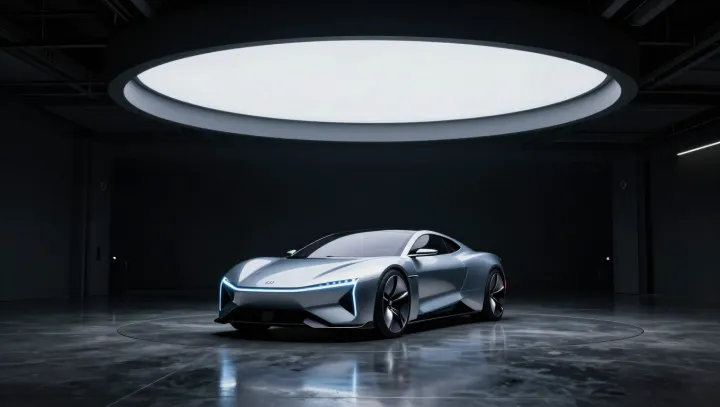
Bodywork now sets the first benchmark, not horsepower charts. Light skimming across a fender exposes air separation, surface turbulence, even panel misalignment that wind‑tunnel smoke once hid. Designers chase specific specular highlights and shadow lines, because those streaks trace pressure gradients and help tune drag coefficient and lift balance without adding weight.
The bold claim from studios is simple: reflections steer behavior faster than torque numbers. A razor‑sharp shoulder line can make a car feel agile before a wheel turns, while its underlying curvature is modeled with computational fluid dynamics and photometric analysis in the same loop. That closed‑loop between CFD meshes and virtual lighting rigs lets teams trim frontal area, guide cooling airflow and manage boundary layers while preserving the signature light sweep that anchors brand identity.
Even powertrain packaging now yields to how illumination moves. Battery housings and intercooler ducts are bent so a single crease can both feed air and carry a continuous highlight from headlamp to tail, increasing perceived speed and visual stability. Cabin interfaces follow the same logic: ambient strips map to throttle modes, using luminance contrast and human factors research to make drivers sense grip limits sooner than any warning chime can.