
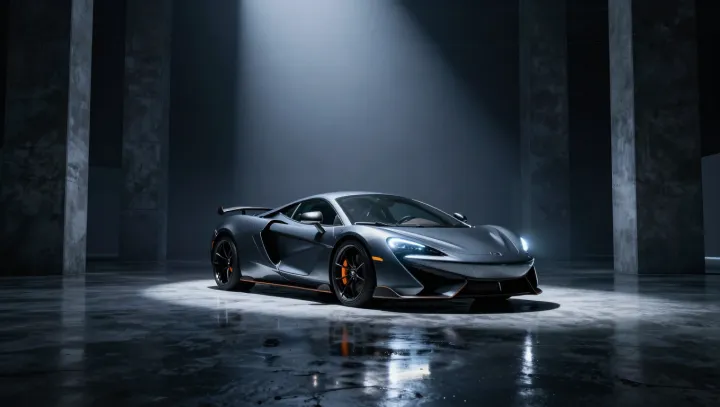
Traction, not horsepower, now calls the shots in the 0–100 km/h sprint. Power is cheap; grip is scarce, so the winning cars are the ones that treat rubber contact patches as a resource to be allocated in microseconds by software rather than wasted in wheelspin.
Launch control is no party trick; it is a closed‑loop control system running at processor speeds, trimming motor torque or turbo boost the instant wheel‑speed sensors and accelerometers report slip beyond the sweet spot defined by the friction circle of the tires. One wheel steps out of line. Power cuts. Then returns. Fast. This loop repeats dozens of times before the driver can even react, keeping longitudinal slip near the coefficient of friction peak instead of letting it smear into smoke.
Torque vectoring raises the stakes. The car stops thinking in terms of front and rear axles and starts treating each driven wheel as a separate channel for yaw control and traction, shuffling Newton‑meters side to side to keep the chassis neutral as weight transfers rearward. Under full throttle, that distribution quietly corrects micro‑slides long before they become visible oversteer, so more of the available normal force actually converts into forward acceleration instead of lateral scrub.
Active aerodynamics then turns speed into extra grip. Moveable wings and diffusers manipulate pressure distribution so that downforce, and therefore normal load on the tires, ramps up exactly as acceleration builds, with minimal drag penalty at low speed. At higher velocity the car is effectively heavier without adding mass, which stretches the friction circle upward and lets traction control request more torque from engines or electric motors. The stopwatch only records the result; the real drama happens in the invisible dialogue between software, airflow and four small patches of rubber.