
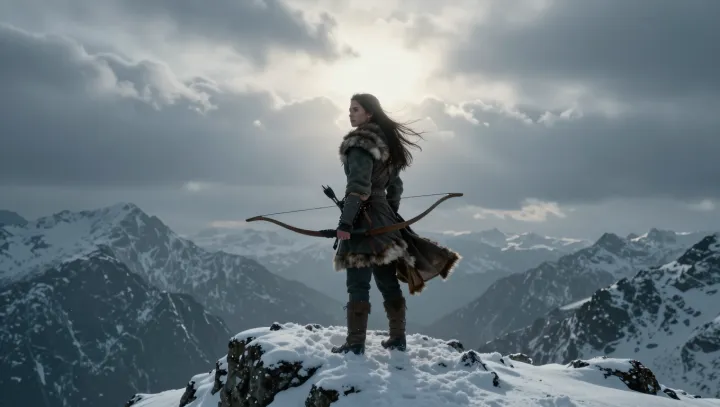
A frozen ridge, not a throne room, now defines epic fantasy’s center of gravity. Where prophecy once crowned a farm-born heir, the silent archer clinging to ice and thin air reframes heroism as raw persistence against scale, not destiny. That ridge erases village backstory, court intrigue, even theology, until only one moving point remains: a human outline, barely holding.
This shift is not just aesthetic; it is ideological. The archer speaks rarely, so interior monologue and royal bloodlines lose priority, while exposure, hypothermia, and limited caloric intake take over as narrative engines. The plot runs on wind chill and whiteout, on cartography and topography, on whether tendons still answer after hours at full draw, not on inherited swords or secret sigils revealed at midnight.
More radical is how that frozen vantage breaks the old social contract between story and reader. Once, the world tilted to meet the chosen one; mountains parted, mentors appeared on schedule, supply lines never snapped. Now the planet does not care. The blizzard does not scale down for character growth. The archer’s victories are microscopic: a breath held, a shot loosed, a descent survived. Yet from those specks of will, a new epic scale emerges, measured not in dynasties, but in how long a lone figure can stay upright against the white.