
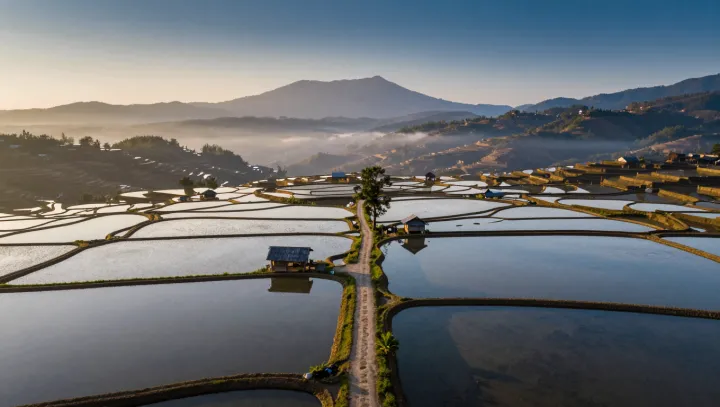
Thin water, not thick machinery, carries the real power here. On stepped slopes, water spreads into films only a few centimeters deep, then creeps from one level to the next, turning gravity from a threat into a manager of nutrients and energy across the entire terrace system.
The central trick is hydraulic control, not chemical escalation. Slow sheet flow reduces shear stress, so soil particles stay put and erosion rates remain low, even on steep gradients, while suspended organic matter settles rather than washing away. That calm water column becomes a bioreactor, supporting dense communities of nitrifying and denitrifying bacteria that regulate nitrogen mineralization and limit leaching. By moving in stages, the same water irrigates multiple fields, each step stripping a different fraction of dissolved phosphorus, potassium and micronutrients, building a closed-loop nutrient budget instead of demanding fresh fertilizer.
Equally underrated is how these terraces engineer time. Prolonged water residence increases redox stratification in the flooded soil profile, promoting alternation between aerobic and anaerobic zones that stabilizes soil organic carbon and maintains cation exchange capacity. Repeated wetting and draining cycles encourage root turnover, adding fresh litter that fuels microbial biomass. Yield stability follows from this engineered patience: temperature swings are buffered, drought shocks soften, and plants tap a steady, modest nutrient flow rather than a single fertilizer spike. The result is not maximal output in any one season, but a stubbornly steady harvest across many.