
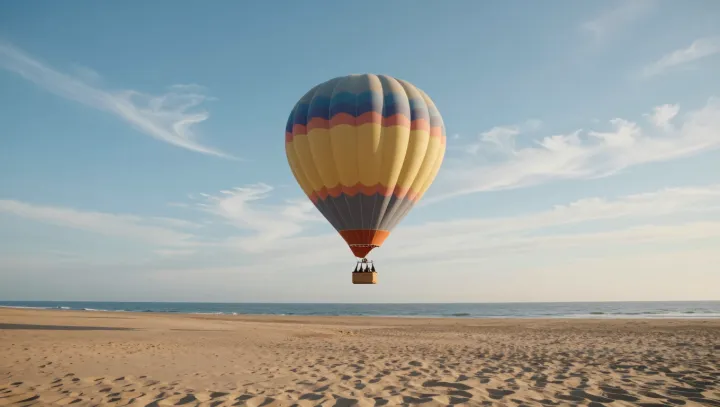
Empty coastline does the steering first. Long surf lines set up wind bands that run almost like stripes, separated by height and temperature rather than painted on water. Above that straight shore, air stacks in layers, each with its own vector and speed, thanks to friction at the surface and a sharp gradient in temperature called an inversion.
The uncomfortable truth is that balloon control is mostly vertical, yet it still draws a horizontal track on a map. Pilots heat the envelope to climb into one shear layer, then let it cool to drop into another, exploiting differences in geostrophic flow and sea‑breeze circulation as if they were shifting lanes on a highway. Short burn. Small climb. Entire heading changes by several degrees without a single rudder or aileron in sight.
What sounds like guesswork is closer to low‑tech meteorology in real time. Before launch, pilots study skew‑T diagrams and wind profiles from weather balloons or forecast models, looking for altitudes where the wind backs or veers along the coast. Up in the basket, they confirm with simple markers: smoke, ripples on water, GPS drift. The balloon stays a passive hull; the pilot, working that invisible staircase of air, is the only moving part.
So a straight shoreline looks fixed, but the air above it behaves like a multi‑track rail yard, and the balloon, hanging from its column of heated air, slides from track to track until water and sand no longer line up beneath the basket.