
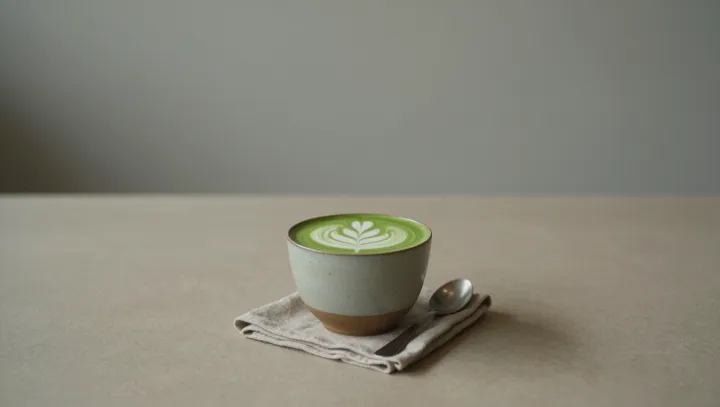
A matcha latte looks like a gentle drink, yet its focus profile is surprisingly aggressive. The difference is not raw caffeine count but how that caffeine enters and modulates the brain over time.
At the center is L-theanine, an amino acid that coffee largely lacks. By increasing alpha brain waves and tweaking glutamate and GABA signaling, it softens caffeine’s spike in neuronal firing, so attention tightens without the jittery motor overdrive that often follows espresso shots.
More interesting is matcha’s pharmacokinetics. Finely milled tea leaves suspended in milk or oat foam slow gastric emptying and caffeine absorption, which stretches the plasma concentration curve. Instead of a steep rise that slams adenosine receptors and drives a compensatory cortisol surge, the climb is smoother, so the come-down is less abrupt.
There is also a quiet antioxidant layer at work. Catechins such as EGCG appear to damp oxidative stress and may nudge nitric oxide pathways, supporting cerebral blood flow while the central nervous system stays under stimulant load. That biochemical buffer, slight though it is, helps explain why a creamy cup of matcha feels like a held note while coffee often behaves like a flare.