
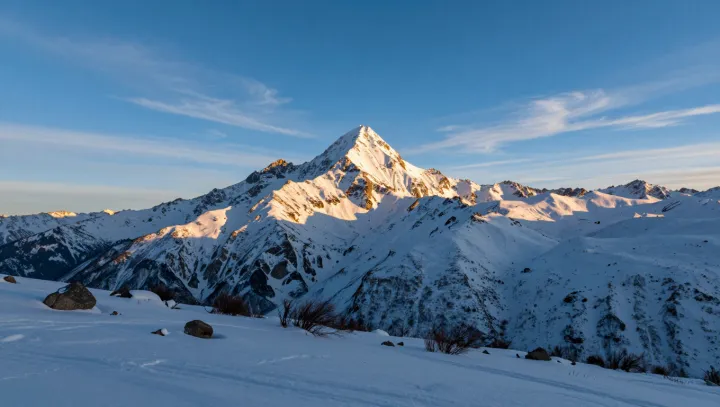
Bare rock there is not dead space at all. It acts as a fortress of cracks and pores where life hides from ultraviolet radiation and wind while still catching enough light to run photosynthesis. Within millimeters, temperatures swing less, liquid water lingers longer, and thin films of dust feed microbial mats that behave more like slow cities than scattered cells.
The harsher the surface looks, the more radical the biology has to be. Many alpine microbes stockpile protective pigments such as carotenoids and melanins, which physically absorb ultraviolet photons and limit DNA damage, while enzymes in nucleotide excision repair systems cut and replace injured bases before mutations accumulate. Antifreeze proteins and flexible membrane lipids keep cytoplasm from forming lethal ice crystals, and some lichens tolerate complete desiccation, then reboot metabolism once a brief thaw wets their tissues.
Survival here depends less on growth than on waiting. Metabolic rates drop to trace levels, a form of cryptobiosis that lets moss cushions, tardigrades and rotifers endure repeated freeze–thaw cycles that would shred most cell walls. Snowfields, which look sterile from a distance, host colored blooms of snow algae whose chloroplasts keep running at low photon flux, turning transient meltwater into a short but intense production pulse that feeds insects and tiny grazers downslope before the surface hardens again.