
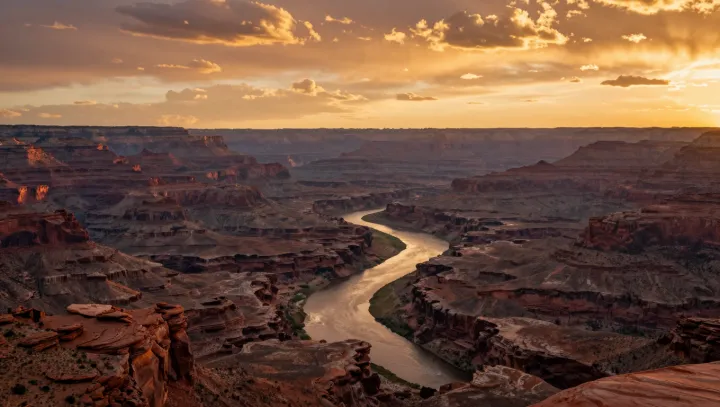
Shadows make better instructors than headlights. Across a canyon wall, a slow crawl of darkness turns vague cliffs into a stacked archive, each band separating into distinct sedimentary layers as the incident angle of moonlight shifts and the relief of tiny ledges throws exaggerated penumbrae.
Veteran canyon drivers insist the real lesson is not just stratigraphy but cognitive bias. Under daylight, high luminance, motion parallax and constant visual noise push the brain into a kind of perceptual triage; saccadic suppression, change blindness and speed habituation filter out subtle discontinuities that reveal fault lines or unconformities. At night, with low photon counts and almost no traffic, the visual cortex is forced into temporal integration, stacking faint cues over hours, so a minor offset in a bedding plane becomes undeniable as its shadow migrates across the slope, frame by frame.
The claim sounds romantic; it is really a critique of daylight confidence. A single fast run under full sun flatters the driver, feeding the illusion that high resolution equals full understanding. Twelve silent hours, by contrast, expose how much of the rock and of the mind sits below threshold, waiting for the slow swing of light to bring it, briefly, into reach.