
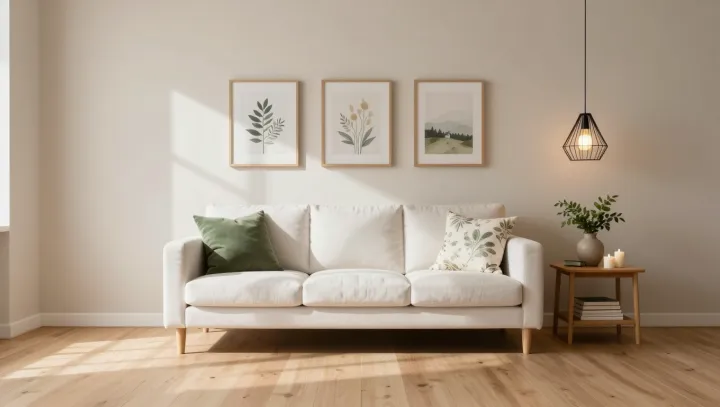
A muted living room now behaves less like decor and more like equipment. Designers increasingly treat the space as a cognitive device, stripping away visual noise to mimic the effect of noise‑canceling headphones on the auditory system, using light, texture and layout as the main control knobs for neural stimulation.
The blunt truth is that cluttered rooms cost the brain energy. Neuroimaging studies on selective attention show that every extra object in view demands processing in the visual cortex, raising cognitive load and perceived stress, so designers are pruning furniture counts and removing busy patterns to protect what psychologists call working‑memory capacity.
The bolder claim is that light now acts like a drug. By favoring diffuse, indirect illumination and warmer color temperature, studios are trying to stabilize circadian rhythm and reduce amygdala activation, while matte, tactile surfaces scatter glare and feed just enough haptic feedback to keep sensory input balanced rather than hyperactive.
Layout, too, has turned strategic. Long sightlines, low seating profiles and clear walking paths support smoother oculomotor control and lower heart‑rate variability, which are linked to calmer autonomic nervous system responses, so the quiet room stops being a style choice and starts working as a behavioral interface between body and mind.