
A single corner, not an empty room, now carries the weight of minimalism. Interior designers argue that restraint means editing, not erasing, and they are proving it with tight, almost surgical spatial planning that turns one slice of a room into a quiet control center for daily life.
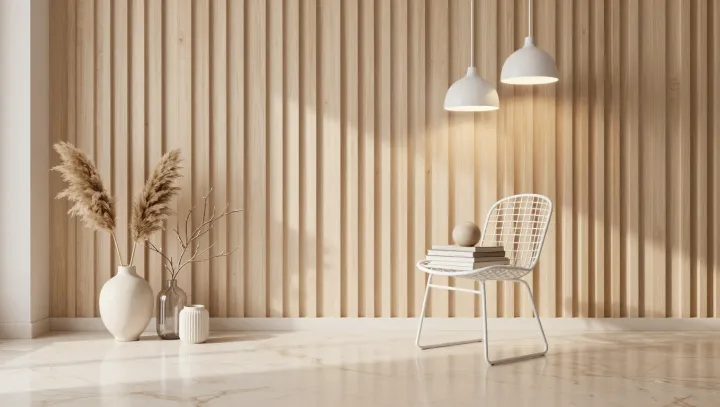
At the heart of this shift sits a pared-back vignette: a light wood-paneled wall, two modest pendant lamps, one wire chair, neutral vases, and a few dried stems. Nothing feels decorative for its own sake; every object is assigned a task, from softening acoustics to shaping the light cone that defines where a body can read, think, or pause. The corner works like a visual pause button, yet it is also a workstation for focus and recovery.
Designers insist this is not austerity but calibration. Warm timber tones manage perceived color temperature, while the negative space around the chair functions as psychological white space, lowering cognitive load the way a clean interface eases decision fatigue. Instead of chasing an empty floor plan, clients are being coached to build one intentional, calm node and let the rest of the home orbit around it.