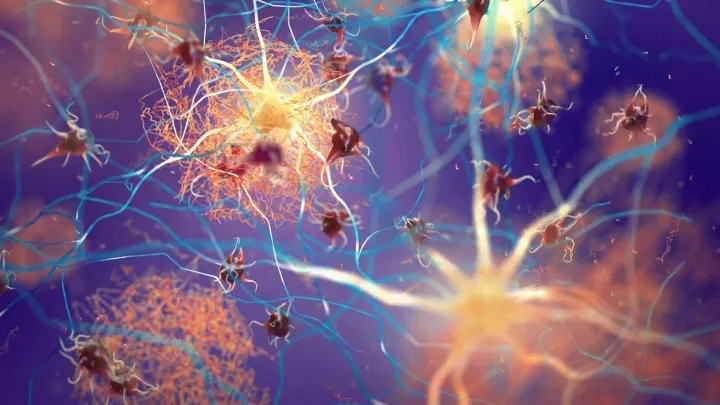
Protein crowding, not neuron death, quietly sets the stakes in this study. Inside brain cells, Tau and alpha-synuclein often condense into liquid-like droplets, a process known as liquid–liquid phase separation, that can harden into the fibrillar aggregates linked to Alzheimer’s and Parkinson’s. New work from Baylor College of Medicine argues that the cell already carries a built-in counterweight: tubulin, the core building block of microtubules.
The bold claim is that tubulin does not just scaffold transport; it actively rewrites protein destiny. In biochemical assays and cell models, tubulin bound Tau and alpha-synuclein and shifted them away from condensates that seed amyloid-like aggregates, channeling them instead into microtubule assembly and axonal cargo movement. This reframes Tau and alpha-synuclein less as inevitable toxins and more as workers that go rogue only when the tubulin network is overloaded or misregulated.
The most provocative idea is therapeutic: do not only block aggregation, strengthen the traffic grid. By tuning tubulin availability or stabilizing microtubule–protein interactions, future drugs might bias Tau and alpha-synuclein toward physiological binding states and away from pathogenic nucleation. For a field long fixated on dissolving plaques and inclusions, the quiet machinery of intracellular transport now looks like a more interesting place to watch.