
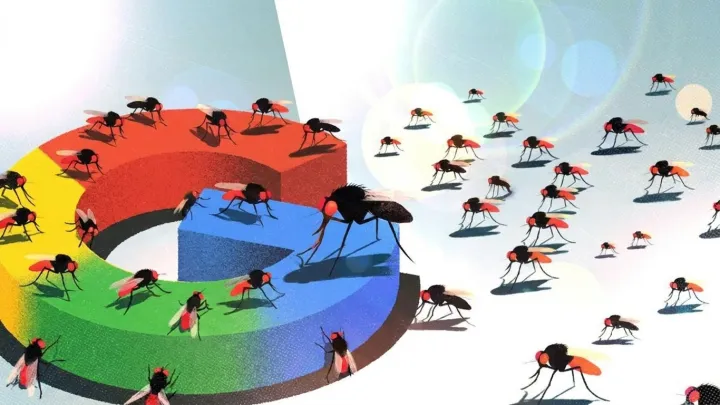
Sixty‑four million mosquitoes sound less like public health and more like a horror script, yet that swarm has become Google’s latest bet against disease. Through Verily, its life sciences affiliate, the company is scaling a mosquito release campaign in California and Florida after a smaller trial rewrote expectations in one test city.
Most striking is the claim that biting females of one disease‑carrying species dropped by about ninety‑five percent in Fresno, a result that gives this bio‑control tool an aura of inevitability. The method is blunt in concept yet intricate in biology: male Aedes aegypti are bred carrying the bacterium Wolbachia, which triggers cytoplasmic incompatibility so that matings with wild females yield eggs that do not hatch, collapsing local vector populations without insecticide.
Skeptics argue that releasing any engineered or lab‑reared insect into dense neighborhoods turns whole communities into test fields, even if only non‑biting males are used. Advocates answer that conventional larvicides and adulticides drive resistance and harm non‑target species, while this approach targets reproductive biology and population genetics, aiming to cut dengue or Zika risk by shrinking the competent vector pool. Between those positions sits a practical question: how many releases, over how wide an area, can keep that Fresno‑style ninety‑five percent drop from quietly rebounding.