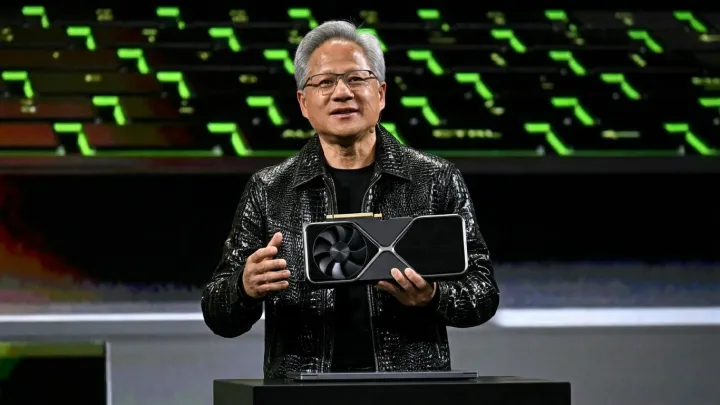
Attention is shifting before any silicon is public, and Nvidia’s unnamed N1X laptop processors already act like the headline act for Computex as Microsoft and Arm echo the tease across their own channels.
That pre-launch alignment is less about marketing noise and more about control of the client compute stack, where Nvidia wants N1X to sit between GPU dominance and a fresh bid for CPU influence, even as Microsoft pushes Copilot-heavy Windows on Arm and Arm itself courts OEMs with instruction set efficiency and tighter power envelopes for thin notebooks. In this triangle, N1X hints at custom cores and aggressive power management, meant to anchor Nvidia inside every stage of the laptop pipeline, from firmware hooks to CUDA and machine learning runtimes.
What looks like a simple keynote tease is actually a negotiation over who owns the reference design for the AI PC, with Microsoft signaling that NPU throughput and on-device inference latency will set the rules, Arm signaling that ISA licensing and systems-on-chip integration remain non‑negotiable, and Nvidia signaling that any definition of an AI laptop without its silicon and software stack is incomplete. All eyes now move to the keynote stage, where product names will matter less than which partner stands closest to the slides.