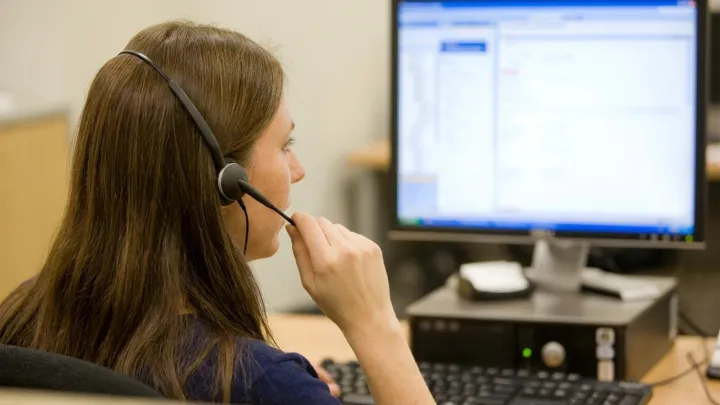
Ceilings go lower, lights dim, and the office starts to whisper. Microphones hidden in bezels and desk lamps wait for wake words, while noise-canceling panels carve the floor into acoustic islands. The loudest thing in the room is not a person, but the small chime that says a voice assistant is listening again.
The next battle over productivity will be fought in air, not on screens. As automatic speech recognition and natural language processing grow more accurate, companies treat spoken prompts as a new input layer, tuning ventilation, acoustics, and even seating plans around signal-to-noise ratios and latency budgets. Meeting rooms shrink into one-person pods, because shared space becomes a liability once every stray sentence can trigger a transcript, a summary, or a compliance alert.
Office culture will be reshaped less by robots and more by metrics. Firms already track keystrokes and tickets; the logical extension is dashboards for prompt volume, assistant response time, and error rates in entity extraction. Short bursts of talk replace long email threads. Workers learn to issue compressed, almost coded commands, then shift into silent review as machine-generated drafts roll back over their screens. Collaboration patterns tilt toward asynchronous voice notes and annotated transcripts, while casual chat retreats to the few remaining zones where no microphone is embedded in the furniture.