
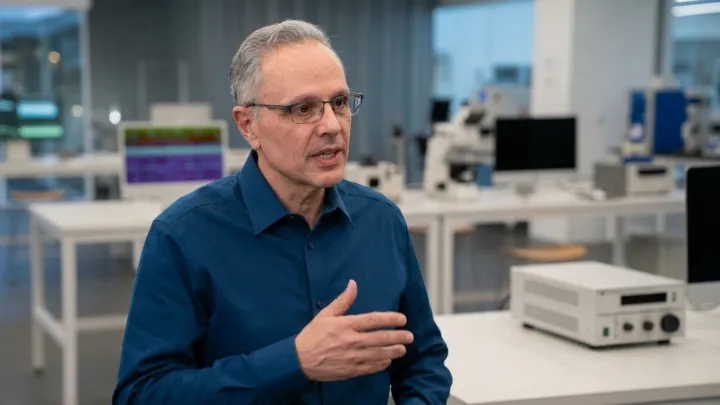
Power is shifting inside Apple’s hardware stack before any product line changes on store shelves. An expanded mandate for Johny Srouji now makes the internal chip architect the central node connecting silicon design to device engineering, even as John Ternus leaves that engineering perch for the chief executive’s chair.
This move looks less like a promotion cycle and more like a bet on vertical integration. Srouji, long in charge of Hardware Technologies, will now lead Hardware Engineering as Chief Hardware Officer, reporting directly to Ternus. That puts the same executive over custom system‑on‑chip roadmaps and the mechanical and electrical engineering teams that must design around thermal envelopes, memory bandwidth limits, and power‑management circuitry.
What changes is not Apple’s direction but its center of gravity. Current chief executive Tim Cook has said Srouji drove the transition to Apple silicon, an overhaul that replaced off‑the‑shelf processors with proprietary architectures tuned for performance‑per‑watt and tight integration of CPU, GPU, and neural processing units. Putting that architect over the broader hardware organization reduces organizational impedance between chip layout, board design, and enclosure constraints.
Skeptics may see concentration of technical authority as a single point of failure, yet inside Apple this structure can shorten feedback loops between silicon validation, firmware, and industrial design. Ternus, freed from day‑to‑day component trade‑offs, can focus on product portfolio and brand, while Srouji runs the dense, sometimes opaque, physics‑driven negotiations that decide what Apple devices can actually be built.