
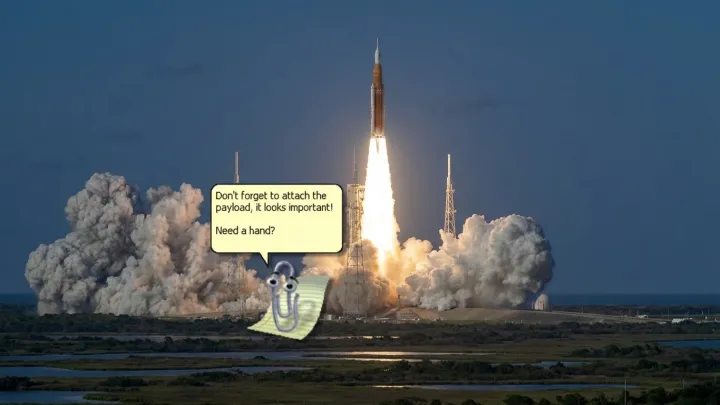
Email became rocket science when a NASA crew tried to send a message from orbit and found that Outlook would not cooperate. Instead of a dramatic systems failure, the obstacle was painfully familiar: the same productivity software that clogs office desktops was misbehaving inside a spacecraft.
The incident, shared by Artemis II commander Reid Wiseman, highlights how every digital step in space rides on layers of avionics, telemetry and fault-tolerant networking. A simple click on “send” depends on signal propagation, bandwidth allocation and error-correction codes that keep data packets alive across the void. What looks like a minor user interface glitch masks a full stack of constraints, from radiation-hardened processors to human–machine interface design tuned for high cognitive load.
For mission planners, an email delay is not just an annoyance but a reminder that communication protocols, redundancy architecture and systems integration matter as much as thrust or delta-v. As spacecraft cabins start to resemble ordinary workplaces, the boundary between mission-critical software and everyday productivity tools blurs, turning even inbox management into part of the entropy budget of human spaceflight.