
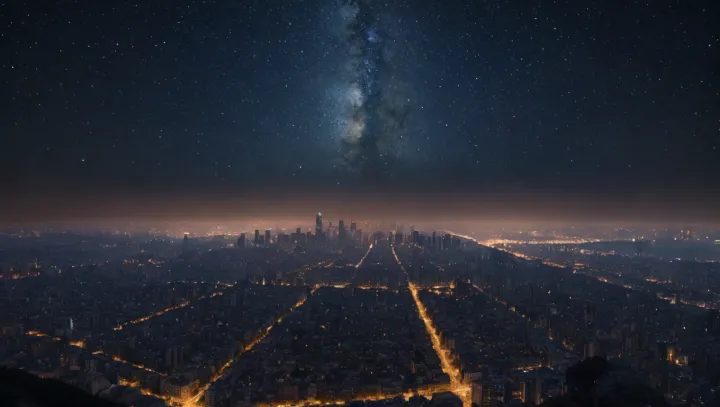
Scientists and astronomy enthusiasts alike are sounding alarms over the increasingly negative impact of light pollution on the visibility of stars in the night sky. In urban areas across the globe, where artificial lighting dominates, the once prominent constellations are now a mere whisper of their former glory.
Recent observations have shown that in many cities, residents are no longer able to view even the brightest stars due to the pervasive glow of city lights. This phenomenon not only affects casual stargazers but also has serious implications for scientific research and the ecosystem.
Research conducted at the Atacama Observatory in Chile underscores the severity of the situation. Scientists there report that the glow from nearby urban centers is encroaching upon one of the world's darkest skies, hindering their ability to conduct deep-space observations.
In addition to diluting the majesty of the night sky, light pollution disrupts migratory patterns and confuses nocturnal wildlife. It also affects human circadian rhythms, potentially leading to adverse health effects.
Awareness campaigns and initiatives such as 'Turn off the Lights for Stars' night are being organized globally to combat light pollution. By implementing smarter lighting solutions and using light fixtures that minimize scatter, some progression in reclaiming the natural night sky is seen.
As these efforts gain traction, there is hope for a future where the Milky Way and the pantheon of celestial bodies can once again be witnessed in their full splendor by anyone simply looking up on a clear night.